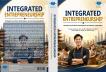
INTEGRATED ENTREPRENEURSHIP: Strategi Inovasi Bisnis Berkelanjutan dan Berdaya Saing Global
Synopsis
Dunia bisnis abad ke-21 bergerak dengan kecepatan dan kompleksitas yang belum pernah disaksikan oleh generasi-generasi sebelumnya. Revolusi Industri 4.0, akselerasi transformasi digital, tekanan krisis iklim, serta dinamika geopolitik global telah menggeser cara para pelaku usaha memahami penciptaan nilai. Dalam lanskap yang oleh banyak pakar disebut sebagai kondisi VUCA volatile, uncertain, complex, dan ambiguous kewirausahaan tidak lagi dapat dipandang sebagai aktivitas tunggal yang berdiri sendiri, melainkan sebagai sebuah sistem yang saling terkait antara inovasi, teknologi, keberlanjutan, kepemimpinan, dan tanggung jawab sosial. Dari kesadaran inilah paradigma Integrated Entrepreneurship, atau kewirausahaan terintegrasi, lahir dan berkembang sebagai kerangka berpikir yang relevan untuk menavigasi kompleksitas tersebut.
Literatur kewirausahaan yang tersedia secara luas masih didominasi oleh perspektif dan studi kasus dari Amerika Serikat dan Eropa, yang meskipun kaya secara teoretis, tidak selalu mencerminkan realitas institusional, kultural, dan ekonomi yang dihadapi oleh wirausahawan di Indonesia dan kawasan Asia. Kesenjangan inilah yang mendorong kami menulis buku ajar ini sebuah upaya menghadirkan kerangka konseptual yang kokoh, namun tetap berpijak pada konteks dan studi kasus yang dekat dengan keseharian pembaca di kawasan Asia Tenggara dan Asia pada umumnya.
Downloads
Download data is not yet available.
References
Adams, C. A., Alhamood, A., He, X., Tian, J., Wang, L., & Wang, Y. (2022). The development and implementation of GRI Standards: Implications for sustainability reporting quality and accountability. Accounting, Auditing & Accountability Journal, 35(7), 1721–1745.
Akarsu, T. N. (2023). Digital transformation towards a sustainable circular economy: Can it be the way forward? Journal of Information Technology Teaching Cases, 14(2), 145–152.
Alkaraan, F., Elmarzouky, M., Hussainey, K., & Venkatesh, V. G. (2024). Digital technologies and sustainability performance: The role of IoT in environmental management and carbon reduction. Business Strategy and the Environment, 33(1), 215–231.
Amir, M. T., & Prabawani, B. (2023). Sustainability-oriented innovation through shaping the ecosystem: A case of an e-bus industry in Indonesia. Cogent Business & Management, 10, Article 2234567.
Atan, R., Alam, M. M., Said, J., & Zamri, M. (2023). The impacts of environmental, social, and governance factors on firm performance: A review of recent evidence. Sustainability, 15(8), 6754.
Bag, S., Gupta, S., Kumar, A., & Sivarajah, U. (2022). Role of digital technologies in green supply chain management and sustainable performance. Technological Forecasting and Social Change, 176, 121424.
Bappenas. (2023). Roadmap tujuan pembangunan berkelanjutan (SDGs) Indonesia. Kementerian Perencanaan Pembangunan Nasional Republik Indonesia.
Bautista-Puig, N., Lozano, R., & Barreiro-Gen, M. (2023). Developing a sustainability implementation framework: Insights from academic research on tools, initiatives and approaches. Environment, Development and Sustainability, 25, 11011–11031.
Ben-Daya, M., Hassini, E., & Bahroun, Z. (2021). Internet of Things and supply chain management: A literature review. International Journal of Production Research, 59(15), 4719–4742.
Benn, S., Edwards, M., & Williams, T. (2021). Sustainability: A key idea for business and society. Routledge.
Breque, M., De Nul, L., & Petridis, A. (2021). Industry 5.0: Towards a sustainable, human-centric and resilient European industry. European Commission.
Büyüközkan, G., & Göçer, F. (2021). Digital supply chain: Literature review and future directions. Computers in Industry, 129, 103458.
Busulwa, R. (2023). Navigating digital transformation in management. Routledge.
Castka, P., & Balzarova, M. A. (2021). ISO 26000 and social responsibility: A systematic review of implementation and organizational impacts. Social Responsibility Journal, 17(8), 1201–1218.
Centobelli, P., Cerchione, R., Del Vecchio, P., Oropallo, E., & Secundo, G. (2024). Digital technologies and green logistics: A systematic review for sustainable supply chain management. Business Strategy and the Environment, 33(2), 1124–1142.
Chen, C.-T., Khan, A., & Chen, S.-C. (2024). Modeling the impact of BDA-AI on sustainable innovation ambidexterity and environmental performance. Journal of Big Data, 11(124), 1–28.
De Oliveira, K. B., et al. (2022). Factors influencing the implementation of an integrated corporate sustainability and business strategy. Journal of Cleaner Production, 343, 131036.
Di Vaio, A., & Varriale, L. (2020). SDGs and airport sustainable performance: Evidence from Italy on organisational, accounting and reporting practices through financial and non-financial disclosure. Sustainability, 12(4), 1318.
Di Vaio, A., Hassan, R., Palladino, R., & Escobar, O. (2024). Digital transformation and sustainable business models: Industry 5.0 perspectives. Springer.
Di Vaio, A., Palladino, R., Hassan, R., & Escobar, O. (2025). Artificial intelligence and business sustainability: New approaches for corporate governance and ESG performance. Springer.
Eccles, R. G., Lee, L. E., & Stroehle, J. C. (2020). The social origins of ESG: An analysis of Innovest and KLD. Organization & Environment, 33(4), 575–596.
Edward, A. J., Mukthar, K. P. J., & Murugesan, T. K. (Eds.). (2023). Digital transformation for business sustainability: Trends, challenges and opportunities. Springer.
Esmaeilian, B., Sarkis, J., Lewis, K., & Behdad, S. (2020). Blockchain for the future of sustainable supply chain management in Industry 4.0. Resources, Conservation and Recycling, 163, 105064.
Fatemi, A., Glaum, M., & Kaiser, S. (2021). ESG performance and firm value: The moderating role of disclosure. Global Finance Journal, 38, 45–64.
Floridi, L., Cowls, J., King, T. C., & Taddeo, M. (2021). How to design AI for social good: Seven essential factors. Science and Engineering Ethics, 27(3), 1–19.
Fonseca, L., & Domingues, J. P. (2018). ISO 14001:2015 adoption: A multi-country empirical research. Journal of Industrial Engineering and Management, 11(4), 707–733.
Friede, G., Busch, T., & Bassen, A. (2021). ESG and financial performance: Aggregated evidence from more than 2,000 empirical studies. Journal of Sustainable Finance & Investment, 11(4), 210–233.
Gillan, S. L., Koch, A., & Starks, L. T. (2021). Firms and social responsibility: A review of ESG and CSR research in corporate finance. Journal of Corporate Finance, 66, 101889.
Global Reporting Initiative. (2021). GRI standards 2021. Global Reporting Initiative.
Goel, A., Raut, G., Sharma, A., & Taneja, U. (2024). Artificial intelligence and sustainable business: A review. Global Business Review. Advance online publication.
Gupta, H., Kusi-Sarpong, S., Rezaei, J., & Zhang, Q. (2023). Big data analytics and environmental sustainability: Applications for carbon footprint measurement and management. Technological Forecasting and Social Change, 193, 122611.
Hahn, R. (2022). ISO 26000 and stakeholder-oriented corporate sustainability management: Developments and future directions. Business Strategy and the Environment, 31(6), 2684–2698.
Heras-Saizarbitoria, I., & Boiral, O. (2022). ISO 14001 and environmental performance: A review of current research and future directions. Business Strategy and the Environment, 31(5), 2121–2135.
Hong, Z., & Xiao, K. (2024). Digital economy structuring for sustainable development: The role of blockchain and artificial intelligence in improving supply chain and reducing negative environmental impacts. Scientific Reports, 14(1), Article 3912.
International Organization for Standardization. (2010). ISO 26000:2010 guidance on social responsibility. ISO.
International Organization for Standardization. (2015). ISO 14001:2015 environmental management systems—Requirements with guidance for use. ISO.
Ivanov, D., & Dolgui, A. (2021). A digital supply chain twin for managing the disruption risks and resilience in the era of Industry 4.0. Production Planning & Control, 32(9), 775–788.
Jonker, J., & Faber, N. (2021). Organizing for sustainability: A guide to developing new business models. Palgrave Macmillan.
Kementerian Badan Usaha Milik Negara. (2023). Pedoman program tanggung jawab sosial dan lingkungan (TJSL) BUMN. Kementerian BUMN Republik Indonesia.
Khalid, J., Chuanmin, M., Altaf, F., Shafqat, M. M., Khan, S. K., & Ashraf, M. U. (2024). AI-driven risk management and sustainable decision-making: Role of perceived environmental responsibility. Sustainability, 16(16), 6799.
Khan, S. A. R., Yu, Z., Umar, M., & Tanveer, M. (2023). Green logistics, digitalization and sustainable supply chain performance: Evidence from emerging economies. Sustainability, 15(4), 3278.
KPMG. (2024). The KPMG survey of sustainability reporting 2024. KPMG International.
Kshetri, N. (2021). Blockchain and sustainable supply chain management. Springer.
Kurniawan, T. A., Othman, M. H. D., Singh, D., Avtar, R., & Hwang, G. H. (2024). Digital transformation for carbon accounting and sustainability reporting: Opportunities and challenges. Sustainability, 16(3), 1187.
Leal Filho, W., Wall, T., Barbir, J., Alverio, G. N., Dinis, M. A. P., & Ramirez, J. (2023). Relevance of the Sustainable Development Goals to business and management practices. Sustainability, 15(4), 3321.
Meinhold, R. (2021). Business ethics and sustainability. Routledge.
Moraes, C. S. B., Silva, M. E., & Oliveira, J. A. (2023). Social responsibility standards and sustainable organizational performance: Evidence from ISO 26000 adoption. Sustainability, 15(11), 9021.
Nahavandi, S. (2022). Industry 5.0—A human-centric solution. Sustainability, 14(13), 7791.
Nishant, R., Kennedy, M., & Corbett, J. (2020). Artificial intelligence for sustainability: Challenges, opportunities, and a research agenda. International Journal of Information Management, 53, 102104.
Otoritas Jasa Keuangan. (2017). Peraturan Otoritas Jasa Keuangan Nomor 51/POJK.03/2017 tentang penerapan keuangan berkelanjutan bagi lembaga jasa keuangan, emiten, dan perusahaan publik. OJK.
Otoritas Jasa Keuangan. (2024). Taksonomi Hijau Indonesia. OJK.
Pizzi, S., Caputo, A., Corvino, A., & Venturelli, A. (2021). Management research and the United Nations Sustainable Development Goals (SDGs): A systematic review. Journal of Cleaner Production, 276, 124033.
Pizzi, S., Caputo, A., Corvino, A., & Venturelli, A. (2022). Sustainability reporting, ESG disclosure, and corporate accountability: Emerging trends and future directions. Journal of Cleaner Production, 344, 130892.
Sachs, J. D., Lafortune, G., Kroll, C., Fuller, G., & Woelm, F. (2022). Sustainable development report 2022. Cambridge University Press.
Saberi, S., Kouhizadeh, M., Sarkis, J., & Shen, L. (2021). Blockchain technology and its relationships to sustainable supply chain management. International Journal of Production Research, 59(7), 2117–2135.
Sforcina, K. (2023). Digitalizing sustainability: The five forces of digital transformation. Routledge.
Sugiarto, A. (2021). Green business: Manajemen bisnis berkonsep ramah lingkungan. Gava Media.
United Nations. (2023). The Sustainable Development Goals Report 2023. United Nations.
van Zanten, J. A., & van Tulder, R. (2021). Towards nexus-based governance: Defining interactions between economic activities and Sustainable Development Goals (SDGs). International Journal of Sustainable Development & World Ecology, 28(3), 210–226.
Velte, P. (2022). Corporate governance and ESG performance: A systematic review of board-related mechanisms and sustainability outcomes. Corporate Ownership and Control, 19(2), 8–28.
Vinuesa, R., Azizpour, H., Leite, I., Balaam, M., Dignum, V., Domisch, S. D., Felländer, A., Langhans, S. D., Tegmark, M., & Fuso Nerini, F. (2020). The role of artificial intelligence in achieving the Sustainable Development Goals. Nature Communications, 11(1), 233.
Wagner, S. M. (2021). Business and environmental sustainability: Foundations, challenges and corporate functions. Routledge.
Ward, H. (2021). Corporate social responsibility and sustainable development: The role of international standards and stakeholder engagement. Routledge.
Wibisono, Y. (2021). Membedah konsep dan aplikasi CSR (Corporate Social Responsibility). Fascho Publishing.
Wiedmann, T., & Minx, J. (2020). A definition of carbon footprint. In C. C. Pertsova (Ed.), Ecological economics research trends (pp. 1–11). Nova Science Publishers.
Wirtz, B. W., Weyerer, J. C., & Sturm, B. J. (2020). The dark sides of artificial intelligence: An integrated AI governance framework for public administration. International Journal of Public Administration, 43(9), 818–829.
Wulandari, S. S. (2025). Strategi usaha kecil menengah untuk meningkatkan ekspor dalam mencapai SDGs. Unesa University Press.
Xu, X., Lu, Y., Vogel-Heuser, B., & Wang, L. (2021). Industry 4.0 and Industry 5.0—Inception, conception and perception. Journal of Manufacturing Systems, 61, 530–535.
Yosef, F. A., Jum’a, L., & Alatoom, M. (2023). Identifying and categorizing sustainable supply chain practices based on triple bottom line dimensions. Sustainability, 15(9), 7323.
Zimon, D., Madzík, P., Domingues, P., & Ikram, M. (2023). The impact of ISO 14001 environmental management systems on sustainable business performance. Sustainability, 15(7), 6024.
Downloads
Published
July 24, 2026
Categories
Copyright (c) 2026 Dr. Yessy Artanti, S.E., M.Si, Dr. Andre Dwijanto Witjaksono, S.T., M.Si., Dr. Sanaji, S.E., M.Si, Dr. Siti Sri Wulandari, S.Pd., M.Pd. Wulandari, S.Pd., M.Pd., Dr. Dewi Ratih, S.E., M.S.M. (Author)

Details about this monograph
ISBN-13 (15)
978-634-97192-3-0
How to Cite
Dr. Yessy Artanti, S.E., M.Si, Wulandari, S.Pd., M.Pd., D. S. S., Dr. Dewi Ratih, S.E., M.S.M., & Dr. Sanaji, S.E., M.Si. (2026). INTEGRATED ENTREPRENEURSHIP: Strategi Inovasi Bisnis Berkelanjutan dan Berdaya Saing Global. PT. Ghani Press Group. https://e-book.ghanipress.com/index.php/ghanipress/catalog/book/77