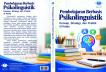
Pembelajaran Berbasis Psikolinguistik Konsep, Strategi, dan Praktik di Kelas
Synopsis
Psikolinguistik menawarkan landasan untuk memahami proses sebagai bidang interdisipliner, psikolinguistik menghubungkan linguistik, psikologi kognitif, neurosains, pemerolehan bahasa, dan pendidikan. Namun, dalam banyak ruang akademik dan pelatihan pendidikan, psikolinguistik terkadang masih diberikan terutama sebagai teori. Konsep-konsep seperti pemerolehan bahasa, memori kerja, input, produksi ujaran, skema, atau kecemasan berbahasa sering dipahami sebagai bahan kajian, tetapi belum selalu diterjemahkan menjadi keputusan pembelajaran yang konkret di kelas. Akibatnya, jarak antara pemahaman teoretis dan praktik pedagogis masih terasa cukup lebar. Dalam konteks pembelajaran, psikolinguistik sebenarnya membantu pendidik menjawab pertanyaan-pertanyaan penting: bagaimana murid memahami teks? Mengapa mereka kesulitan berbicara meskipun memahami kaidah bahasa? Bagaimana kosakata disimpan dalam memori? Bagaimana kecemasan memengaruhi performa berbahasa? Mengapa input, interaksi, dan umpan balik sangat penting dalam pembelajaran Bahasa.
Downloads
Download data is not yet available.
References
Aitchison, J. (2012). Words in the Mind: An Introduction to the Mental Lexicon (4th ed.). Wiley-Blackwell.
Alderson, J. C. (2000). Assessing Reading. Cambridge University Press.
Anderson, N. J. (1995). Individual Differences in Strategy Use in Second Language Reading and Testing. The Modern Language Journal, 75(4), 460-472.
Bachman, L. F., & Palmer, A. S. (1996). Language Testing in Practice: Designing and Developing Useful Language Tests. Oxford University Press.
Baddeley, A. D. (2000). The episodic buffer: A new component of working memory? Trends in Cognitive Sciences, 4(11), 417-423. https://doi.org/10.1016/S1364-6613(00)01538-2
Baddeley, A. D., & Hitch, G. (1974). Working memory. In G. H. Bower (Ed.), The Psychology of Learning and Motivation (Vol. 8, pp. 47-89). Academic Press. https://doi.org/10.1016/S0079-7421(08)60452-1
Bandura, A. (1997). Self-Efficacy: The Exercise of Control. W. H. Freeman.
Black, P., & Wiliam, D. (1998). Assessment and classroom learning. Assessment in Education: Principles, Policy & Practice, 5(1), 7-74. https://doi.org/10.1080/0969595980050102
Brookhart, S. M. (2008). How to Give Effective Feedback to Your Students. ASCD.
Brown, H. D. (2004). Language Assessment: Principles and Classroom Practices. Pearson Education.
Brown, H. D. (2007). Principles of Language Learning and Teaching (5th ed.). Pearson Education.
Brown, H. D., & Abeywickrama, P. (2019). Language Assessment: Principles and Classroom Practices (3rd ed.). Pearson.
Brown, J. D. (1995). The Elements of Language Curriculum: A Systematic Approach to Program Development.
Heinle & Heinle. Bygate, M. (1987). Speaking. Oxford University Press.
Carroll, D. W. (2008). Psychology of Language (5th ed.). Thomson Wadsworth.
Carlisle, J. F. (2000). Awareness of the structure and meaning of morphologically complex words: Impact on reading. Reading and Writing, 12, 169-190. https://doi.org/10.1023/A:1008131926604
Chaer, A. (2009). Psikolinguistik: Kajian Teoretik. Jakarta: Rineka Cipta.
Craik, F. I. M., & Lockhart, R. S. (1972). Levels of processing: A framework for memory research. Journal of Verbal Learning and Verbal Behavior, 11(6), 671-684. https://doi.org/10.1016/S0022-5371(72)80001-X
Cummins, J. (2000). Language, Power and Pedagogy: Bilingual Children in the Crossfire. Multilingual Matters.
Dardjowidjojo, S. (2003). Psikolinguistik: Pengantar Pemahaman Bahasa Manusia. Jakarta: Yayasan Obor Indonesia.
Deci, E. L., & Ryan, R. M. (1985). Intrinsic Motivation and Self-Determination in Human Behavior. Plenum.
Dörnyei, Z. (2001). Motivational Strategies in the Language Classroom. Cambridge University Press.
Dörnyei, Z. (2005). The Psychology of the Language Learner: Individual Differences in Second Language Acquisition. Lawrence Erlbaum Associates.
Dörnyei, Z., & Ushioda, E. (2011). Teaching and Researching Motivation (2nd ed.). Pearson.
Ebbinghaus, H. (1913). Memory: A Contribution to Experimental Psychology (H. A. Ruger & C. E. Bussenius, Trans.). Teachers College, Columbia University.
Ellis, R. (1994). The Study of Second Language Acquisition. Oxford University Press.
Ellis, R. (2009). Corrective feedback and teacher development. L2 Journal, 1(1), 3-18. https://doi.org/10.5070/L2.V1I1.9054 Field, J. (2003). Psycholinguistics: A Resource Book for Students. Routledge.
Field, J. (2008). Listening in the Language Classroom. Cambridge University Press.
Ferris, D. R. (2006). Does error feedback help student writers? New evidence on the short- and long-term effects of written error correction. In K. Hyland & F. Hyland (Eds.), Feedback in Second Language Writing: Contexts and Issues (pp. 81-104). Cambridge University Press.
Flower, L., & Hayes, J. R. (1981). A cognitive process theory of writing. College Composition and Communication, 32(4), 365-387. https://doi.org/10.2307/356600
Flavell, J. H. (1979). Metacognition and cognitive monitoring: A new area of cognitive-developmental inquiry. American Psychologist, 34(10), 906-911. https://doi.org/10.1037/0003-066X.34.10.906
Fredrickson, B. L. (2001). The role of positive emotions in positive psychology: The broaden-and-build theory of positive emotions. American Psychologist, 56(3), 218-226. https://doi.org/10.1037/0003-066X.56.3.218
Gass, S. M., & Selinker, L. (2008). Second Language Acquisition: An Introductory Course (3rd ed.). Routledge.
Gardner, R. C. (1985). Social Psychology and Second Language Learning: The Role of Attitudes and Motivation. Edward Arnold.
Grabe, W. (2009). Reading in a Second Language: Moving from Theory to Practice. Cambridge University Press.
Hamp-Lyons, L., & Condon, W. (2000). Assessing the Portfolio: Principles for Practice, Theory, and Research. Hampton Press.
Harley, T. A. (2014). The Psychology of Language: From Data to Theory (4th ed.). Psychology Press.
Hughes, A. (2003). Testing for Language Teachers (2nd ed.). Cambridge University Press.
Horwitz, E. K., Horwitz, M. B., & Cope, J. (1986). Foreign language classroom anxiety. The Modern Language Journal, 70(2), 125-132. https://doi.org/10.2307/327317
Hyland, K. (2003). Second Language Writing. Cambridge University Press.
Kintsch, W. (1998). Comprehension: A Paradigm for Cognition. Cambridge University Press.
Karpicke, J. D., & Roediger, H. L. (2008). The critical importance of retrieval for learning. Science, 319(5865), 966-968. https://doi.org/10.1126/science.1152408
Krashen, S. D. (1982). Principles and Practice in Second Language Acquisition. Pergamon Press.
Levelt, W. J. M. (1989). Speaking: From Intention to Articulation. MIT Press.
Lightbown, P. M., & Spada, N. (2021). How Languages Are Learned (5th ed.). Oxford University Press.
Long, M. H. (1996). The role of the linguistic environment in second language acquisition. In W. C. Ritchie & T. K. Bhatia (Eds.), Handbook of Second Language Acquisition (pp. 413-468). Academic Press.
MacIntyre, P. D., & Gardner, R. C. (1994). The subtle effects of language anxiety on cognitive processing in the second language. Language Learning, 44(2), 283-305. https://doi.org/10.1111/j.1467-1770.1994.tb01103.x
Mayer, R. E. (2009). Multimedia Learning (2nd ed.). Cambridge University Press.
Nagy, W. E., Anderson, R. C., & Herman, P. A. (1987). Learning word meanings from context during normal reading. American Educational Research Journal, 24(2), 237-270. https://doi.org/10.3102/00028312024002237
Nation, I. S. P. (2013). Learning Vocabulary in Another Language (2nd ed.). Cambridge University Press.
Nation, I. S. P., & Macalister, J. (2010). Language Curriculum Design. Routledge.
Norton, B. (2013). Identity and Language Learning: Extending the Conversation (2nd ed.). Multilingual Matters. Paivio, A. (1990). Mental Representations: A Dual Coding Approach. Oxford University Press.
Pekrun, R. (2006). The control-value theory of achievement emotions: Assumptions, corollaries, and implications for educational research and practice. Educational Psychology Review, 18, 315-341. https://doi.org/10.1007/s10648-006-9029-9
Posner, M. I., & Rothbart, M. K. (2007). Educating the Human Brain. American Psychological Association.
Richards, J. C. (2001). Curriculum Development in Language Teaching. Cambridge University Press.
Sadler, D. R. (1989). Formative assessment and the design of instructional systems. Instructional Science, 18, 119-144. https://doi.org/10.1007/BF00117714
Schmitt, N. (2000). Vocabulary in Language Teaching. Cambridge University Press.
Schmidt, R. (1990). The role of consciousness in second language learning. Applied Linguistics, 11(2), 129-158. https://doi.org/10.1093/applin/11.2.129
Sinclair, J. (1991). Corpus, Concordance, Collocation. Oxford University Press.
Swain, M. (1985). Communicative competence: Some roles of comprehensible input and comprehensible output in its development. In S. Gass & C. Madden (Eds.), Input in Second Language Acquisition (pp. 235-253). Newbury House.
Sweller, J. (1988). Cognitive load during problem solving: Effects on learning. Cognitive Science, 12(2), 257-285. https://doi.org/10.1207/s15516709cog1202_4
Thornbury, S. (2002). How to Teach Vocabulary. Pearson Education. Tomasello, M. (2003). Constructing a Language: A Usage-Based Theory of Language Acquisition. Harvard University Press.
Tomlinson, C. A. (2014). The Differentiated Classroom: Responding to the Needs of All Learners (2nd ed.). ASCD.
Vygotsky, L. S. (1978). Mind in Society: The Development of Higher Psychological Processes. Harvard University Press.
Wiggins, G., & McTighe, J. (2005). Understanding by Design (2nd ed.). ASCD.
Published
October 7, 2026
Categories
Copyright (c) 2026 Mixghan Norman Antono (Author)

How to Cite
Norman Antono, M. (2026). Pembelajaran Berbasis Psikolinguistik Konsep, Strategi, dan Praktik di Kelas. PT. Ghani Press Group. https://e-book.ghanipress.com/index.php/ghanipress/catalog/book/133