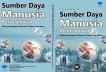
Sumber Daya Manusia Berkelanjutan: Menyeimbangkan Manusia, Bisnis, dan Bumi
Synopsis
Ditulis secara sistematis dalam sepuluh bab, buku ini memadukan kerangka konseptual klasik, seperti Triple Bottom Line, teori stakeholder, teori AMO, dan Resource-Based View, dengan perkembangan mutakhir seperti Green HRM, Environmental, Social, and Governance (ESG), serta Common Good HRM, sehingga memberikan gambaran yang utuh mengenai evolusi pemikiran MSDM berkelanjutan.
Dalam buku ini juga menjelaskan bagaimana prinsip keberlanjutan dapat diintegrasikan ke dalam setiap fungsi SDM, mulai dari perencanaan tenaga kerja dan suksesi, rekrutmen dan seleksi berbasis nilai, pelatihan dan pengembangan karier, manajemen kinerja hijau, hingga sistem kompensasi yang berkeadilan.
Downloads
Download data is not yet available.
References
Ambler, T., & Barrow, S. (1996). The employer brand. Journal of Brand Management, 4(3), 185–206.
Appelbaum, E., Bailey, T., Berg, P., & Kalleberg, A. L. (2000). Manufacturing advantage: Why high-performance work systems pay off. Ithaca, NY: Cornell University Press.
Aust, I., Matthews, B., & Muller-Camen, M. (2020). Common Good HRM: A paradigm shift in Sustainable HRM? Human Resource Management Review, 30(3), 100705.
Barney, J. B. (1991). Firm resources and sustained competitive advantage. Journal of Management, 17(1), 99–120.
Berrone, P., & Gomez-Mejia, L. R. (2009). Environmental performance and executive compensation: An integrated agency-institutional perspective. Academy of Management Journal, 52(1), 103–126.
Blau, F. D., & Kahn, L. M. (2017). The gender wage gap: Extent, trends, and explanations. Journal of Economic Literature, 55(3), 789–865.
Boxall, P., & Purcell, J. (2003). Strategy and human resource management. Basingstoke: Palgrave Macmillan.
Bulla, D. N., & Scott, P. M. (1994). Manpower requirements forecasting: A case example. In D. Ward, T. P. Bechet, & R. Tripp (Eds.), Human resource forecasting and modelling. New York: The Human Resource Planning Society.
Carroll, A. B. (1991). The pyramid of corporate social responsibility: Toward the moral management of organizational stakeholders. Business Horizons, 34(4), 39–48.
Cox, T. H., & Blake, S. (1991). Managing cultural diversity: Implications for organizational competitiveness. Academy of Management Executive, 5(3), 45–56.
Daily, B. F., & Huang, S. C. (2001). Achieving sustainability through attention to human resource factors in environmental management. International Journal of Operations & Production Management, 21(12), 1539–1552.
De Vos, A., Van der Heijden, B. I. J. M., & Akkermans, J. (2020). Sustainable careers: Towards a conceptual model. Journal of Vocational Behavior, 117, 103196.
Docherty, P., Forslin, J., & Shani, A. B. (2002). Creating sustainable work systems: Emerging perspectives and practice. London: Routledge.
Donaldson, T., & Preston, L. E. (1995). The stakeholder theory of the corporation: Concepts, evidence, and implications. Academy of Management Review, 20(1), 65–91.
Dunlop, J. T. (1958). Industrial relations systems. New York: Henry Holt.
Ehnert, I. (2009). Sustainable human resource management: A conceptual and exploratory analysis from a paradox perspective. Berlin: Physica-Verlag.
Ehnert, I. (2009). Sustainable human resource management: A conceptual and exploratory analysis from a paradox perspective. Berlin: Physica-Verlag.
Ehnert, I., & Harry, W. (2012). Recent developments and future prospects on sustainable human resource management: Introduction to the special issue. Management Revue, 23(3), 221–238.
Ehnert, I., Parsa, S., Roper, I., Wagner, M., & Muller-Camen, M. (2016). Reporting on sustainability and HRM: A comparative study of sustainability reporting practices by the world's largest companies. The International Journal of Human Resource Management, 27(1), 88–108.
Ehnert, I., Parsa, S., Roper, I., Wagner, M., & Muller-Camen, M. (2016). Reporting on sustainability and HRM: A comparative study of sustainability reporting practices by the world's largest companies. The International Journal of Human Resource Management, 27(1), 88–108.
Elkington, J. (1997). Cannibals with forks: The triple bottom line of 21st century business. Oxford: Capstone Publishing.
Figge, F., Hahn, T., Schaltegger, S., & Wagner, M. (2002). The sustainability balanced scorecard—Linking sustainability management to business strategy. Business Strategy and the Environment, 11(5), 269–284.
Freeman, R. E. (1984). Strategic management: A stakeholder approach. Boston: Pitman.
Global Reporting Initiative. (2016). GRI 401: Employment 2016. Amsterdam: Global Sustainability Standards Board.
Global Reporting Initiative. (2016). GRI 401: Employment 2016. Amsterdam: Global Sustainability Standards Board.
Global Reporting Initiative. (2018). GRI 403: Occupational Health and Safety 2018. Amsterdam: Global Sustainability Standards Board.
Grant, A. M., Christianson, M. K., & Price, R. H. (2007). Happiness, health, or relationships? Managerial practices and employee well-being tradeoffs. Academy of Management Perspectives, 21(3), 51–63.
Greenhaus, J. H., & Beutell, N. J. (1985). Sources of conflict between work and family roles. Academy of Management Review, 10(1), 76–88.
International Ergonomics Association. (2000). Definition and domains of ergonomics. In W. Karwowski (Ed.), International encyclopedia of ergonomics and human factors. London: Taylor & Francis.
International Labour Organization. (1949). Right to Organise and Collective Bargaining Convention, 1949 (No. 98). Geneva: ILO.
International Labour Organization. (1981). Occupational Safety and Health Convention, 1981 (No. 155). Geneva: ILO.
International Organization for Standardization. (2018). ISO 30414:2018 Human resource management — Guidelines for internal and external human capital reporting. Geneva: ISO.
International Organization for Standardization. (2018). ISO 30414:2018 Human resource management — Guidelines for internal and external human capital reporting. Geneva: ISO.
International Organization for Standardization. (2018). ISO 45001:2018 Occupational health and safety management systems — Requirements with guidance for use. Geneva: ISO.
Jabbour, C. J. C. (2013). Environmental training in organisations: From a literature review to a framework for future research. Resources, Conservation and Recycling, 74, 144–155.
Jackson, S. E., Renwick, D. W. S., Jabbour, C. J. C., & Muller-Camen, M. (2011). State-of-the-art and future directions for green human resource management: Introduction to the special issue. German Journal of Human Resource Management, 25(2), 99–116.
Jackson, S. E., Renwick, D. W. S., Jabbour, C. J. C., & Muller-Camen, M. (2011). State-of-the-art and future directions for green human resource management: Introduction to the special issue. German Journal of Human Resource Management, 25(2), 99–116.
Jackson, S. E., Renwick, D. W. S., Jabbour, C. J. C., & Muller-Camen, M. (2011). State-of-the-art and future directions for green human resource management: Introduction to the special issue. German Journal of Human Resource Management, 25(2), 99–116.
Jamali, D., El Dirani, A., & Harwood, I. (2015). Exploring human resource management roles in corporate social responsibility: The CSR-HRM co-creation model. Business Ethics: A European Review, 24(2), 125–143.
Kaplan, R. S., & Norton, D. P. (1992). The balanced scorecard—Measures that drive performance. Harvard Business Review, 70(1), 71–79.
Karasek, R. A. (1979). Job demands, job decision latitude, and mental strain: Implications for job redesign. Administrative Science Quarterly, 24(2), 285–308.
Kramar, R. (2014). Beyond strategic human resource management: Is sustainable human resource management the next approach? The International Journal of Human Resource Management, 25(8), 1069–1089.
Kramar, R. (2014). Beyond strategic human resource management: Is sustainable human resource management the next approach? The International Journal of Human Resource Management, 25(8), 1069–1089.
Kramar, R. (2014). Beyond strategic human resource management: Is sustainable human resource management the next approach? The International Journal of Human Resource Management, 25(8), 1069–1089.
Kramar, R. (2014). Beyond strategic human resource management: Is sustainable human resource management the next approach? The International Journal of Human Resource Management, 25(8), 1069–1089.
Kristof, A. L. (1996). Person-organization fit: An integrative review of its conceptualizations, measurement, and implications. Personnel Psychology, 49(1), 1–49.
London, M., & Smither, J. W. (1995). Can multi-source feedback change perceptions of goal accomplishment, self-evaluations, and performance-related outcomes? Theory-based applications and directions for research. Personnel Psychology, 48(4), 803–839.
Mariappanadar, S. (2003). Sustainable human resource strategy: The sustainable and unsustainable dilemmas of retrenchment. International Journal of Social Economics, 30(8), 906–923.
Reilly, P. (2003). Guide to workforce planning in local authorities (Report 401). Brighton: Institute for Employment Studies.
Renwick, D. W. S., Redman, T., & Maguire, S. (2013). Green human resource management: A review and research agenda. International Journal of Management Reviews, 15(1), 1–14.
Renwick, D. W. S., Redman, T., & Maguire, S. (2013). Green human resource management: A review and research agenda. International Journal of Management Reviews, 15(1), 1–14.
Renwick, D. W. S., Redman, T., & Maguire, S. (2013). Green human resource management: A review and research agenda. International Journal of Management Reviews, 15(1), 1–14.
Renwick, D. W. S., Redman, T., & Maguire, S. (2013). Green human resource management: A review and research agenda. International Journal of Management Reviews, 15(1), 1–14.
Rothwell, W. J. (2010). Effective succession planning: Ensuring leadership continuity and building talent from within (4th ed.). New York: AMACOM.
Senge, P. M. (1990). The fifth discipline: The art and practice of the learning organization. New York: Doubleday/Currency.
Shore, L. M., Randel, A. E., Chung, B. G., Dean, M. A., Holcombe Ehrhart, K., & Singh, G. (2011). Inclusion and diversity in work groups: A review and model for future research. Journal of Management, 37(4), 1262–1289.
Treviño, L. K., Weaver, G. R., & Reynolds, S. J. (2006). Behavioral ethics in organizations: A review. Journal of Management, 32(6), 951–990.
Van der Heijden, B. I. J. M., & De Vos, A. (2015). Sustainable careers: Introductory chapter. In A. De Vos & B. I. J. M. Van der Heijden (Eds.), Handbook of research on sustainable careers (pp. 1–19). Cheltenham: Edward Elgar Publishing.
Wright, P. M., & McMahan, G. C. (1992). Theoretical perspectives for strategic human resource management. Journal of Management, 18(2), 295–320.
Wright, P. M., Dunford, B. B., & Snell, S. A. (2001). Human resources and the resource-based view of the firm. Journal of Management, 27(6), 701–721.
Wright, P. M., McMahan, G. C., & McWilliams, A. (1994). Human resources and sustained competitive advantage: A resource-based perspective. The International Journal of Human Resource Management, 5(2), 301–326.
Zohar, D. (1980). Safety climate in industrial organizations: Theoretical and applied implications. Journal of Applied Psychology, 65(1), 96–102.
Downloads
Published
August 11, 2026
Categories
Copyright (c) 2026 Dr. Dra. Ec., Siti Rosyafah, M.M. (Author)

Details about this monograph
ISBN-13 (15)
978-634-97317-9-9
Physical Dimensions
How to Cite
Rosyafah, M.M., D. D. E. S. (2026). Sumber Daya Manusia Berkelanjutan: Menyeimbangkan Manusia, Bisnis, dan Bumi. PT. Ghani Press Group. https://e-book.ghanipress.com/index.php/ghanipress/catalog/book/106